All-Terrain Tyres in the UAE: Sizes, Brands and Use
An all-terrain tyre is a road-legal tyre with a more open tread, tougher sidewall and better grip on sand, gravel and rock than a highway tyre. It is the usual choice for UAE 4x4s that split time between city roads and desert. We fit them from AED 390 per tyre.
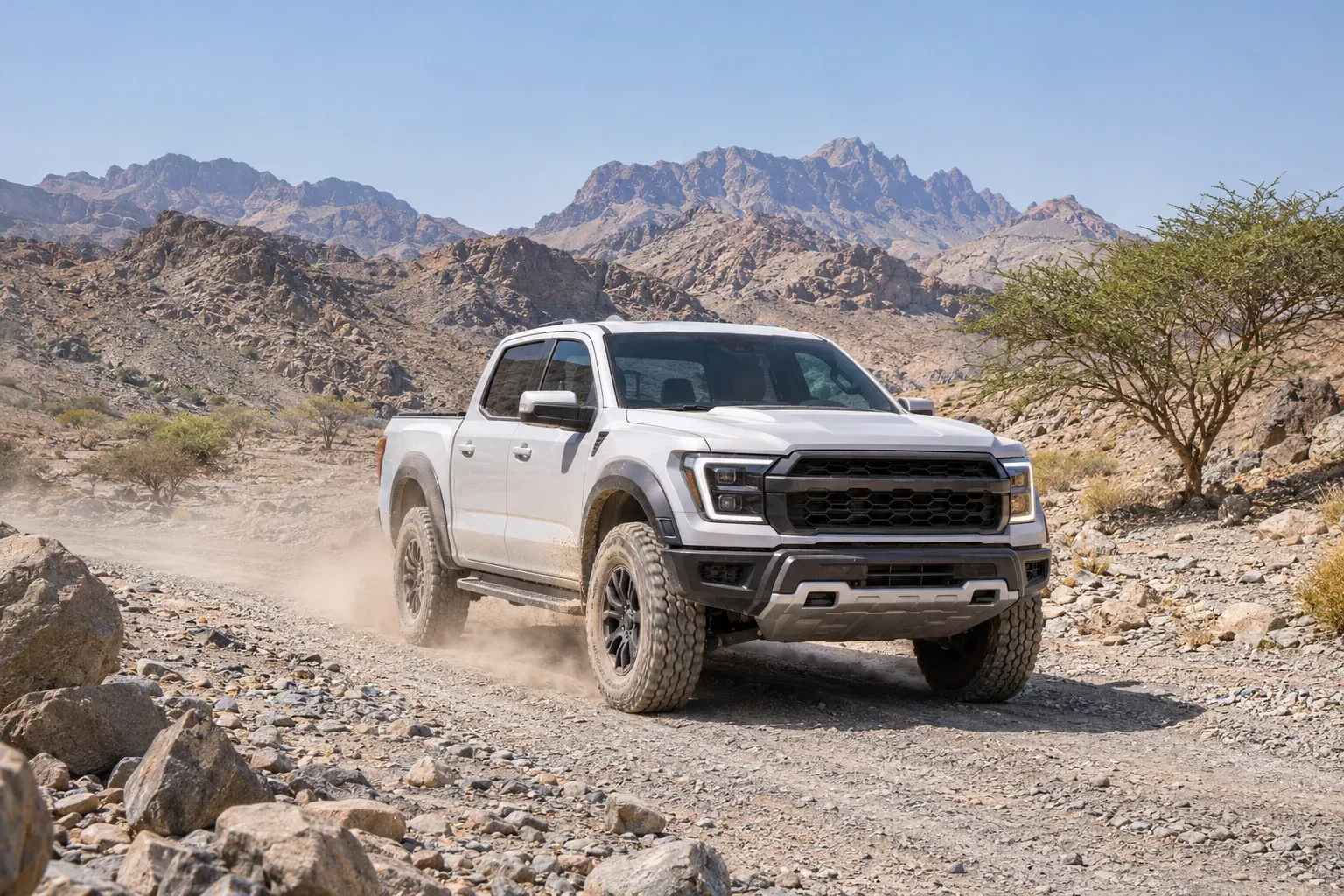
What an all-terrain tyre does well
An all-terrain tyre grips on soft sand when pressure is lowered, handles gravel tracks without chipping and still behaves on tarmac in the heat. The tread blocks are larger than on a highway tyre, which gives bite on loose ground, and the sidewalls are stronger, which resists rock and kerb damage. It is the one tyre that suits Al Qudra at the weekend and Al Khail Road on Monday.
Where an all-terrain falls short
An all-terrain is noisier than a highway tyre and wears faster, and it gives up some wet braking grip. Deep mud and sharp rock are better handled by a mud-terrain, though few UAE drivers need one. If you spend nearly all your time on tarmac and want the quietest ride and longest life, a highway-terrain tyre is a better match. We say so when it fits your use better.
Popular all-terrain models
We fit the BFGoodrich KO3 for owners who want tough sidewalls, the Toyo Open Country AT3 for balanced road and sand behaviour, the Yokohama Geolandar G015 for a quieter road ride, and the Falken Wildpeak AT3W for general all-round use. Prices start from AED 390 per tyre and rise with size and brand. The right model depends on your vehicle weight and how often you leave the tarmac.
- BFGoodrich KO3: durable sidewalls, popular on heavy 4x4s
- Toyo Open Country AT3: balanced road and sand use
- Yokohama Geolandar G015: quieter on the road
- Falken Wildpeak AT3W: all-round value pick
Common all-terrain sizes
Prados and Hiluxes commonly run 265/65 R17, and many Land Cruisers and Patrols use 285/60 R18 or 275/65 R18 depending on trim and year. Wranglers often use 255/75 R17. Check the door placard for the factory size, and ask us before moving to a taller size. Our tyre size guide explains how to read the numbers.
Running all-terrains in UAE heat
Set pressure cold to the door placard value, because pressure rises about 1 psi per 5 to 6 °C. In summer, check monthly, since under-inflation heats the tyre fast on the E11 or E311. For sand, commonly 15 to 20 psi is a starting point, lower only with care and at low speed, and reinflate before tarmac. Rotate every 8,000 to 10,000 km with a tyre rotation from AED 100 per vehicle.
Fitting and price
New all-terrain tyres cost AED 390 to AED 1,800 per tyre, fitted. A full set upgrade starts from AED 1,800 for 4. We fit at the Al Quoz workshop or at your door with a mobile van.
All-terrain compared with other types
Against a highway-terrain, an all-terrain gives better grip on sand and gravel but more noise and some loss of wet grip. Against a mud-terrain, it gives quieter running and longer life but less grip in deep mud and rock. A rugged-terrain sits between the two. For a family 4x4 that visits Hatta or Al Qudra a few times a year, the all-terrain is usually the right balance. Our tyre performance guide explains how the types compare.
The markings that matter on the sidewall
Some sidewall markings matter less in the UAE than abroad, such as the mountain-snowflake symbol. Look instead at the load index, the speed rating and the date code. A load index of 116 or higher suits many heavy SUVs, and the speed rating must match the vehicle. If a marking is unclear, ask us and we will explain it.
When an all-terrain is the wrong choice
If you mostly drive in the city and want a quiet cabin, an all-terrain may annoy you after a while. If your use is mostly rock crawling or deep mud, a mud-terrain will do better. And if your vehicle is a low-slung SUV with limited clearance, a larger tyre may rub. We say so plainly, and recommend the type that fits the way you drive.
Pressure plan for an all-terrain set
Set road pressure cold to the door placard figure. For sand, commonly 15 to 20 psi is a starting point, lowered only with care and at low speed. Reinflate before returning to tarmac, because a soft tyre on the highway overheats fast. Carry a gauge and compressor, and note your pressures, so you can repeat what worked on your vehicle.
Related services
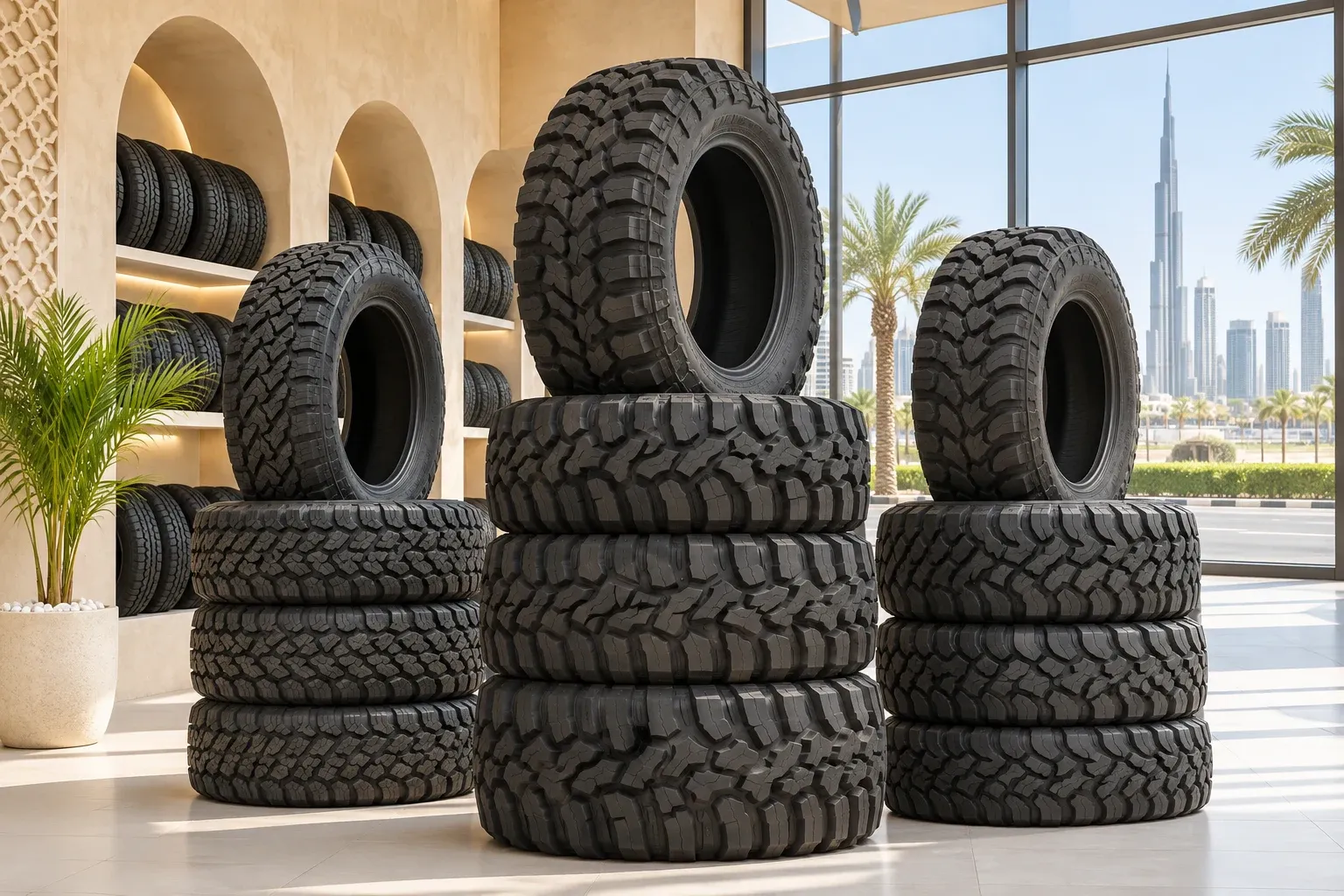
New Off-Road Tyres
Supply and fitting of all-terrain, mud-terrain and rugged-terrain tyres for UAE 4x4s, SUVs and pickups.
AED 390 to 1,800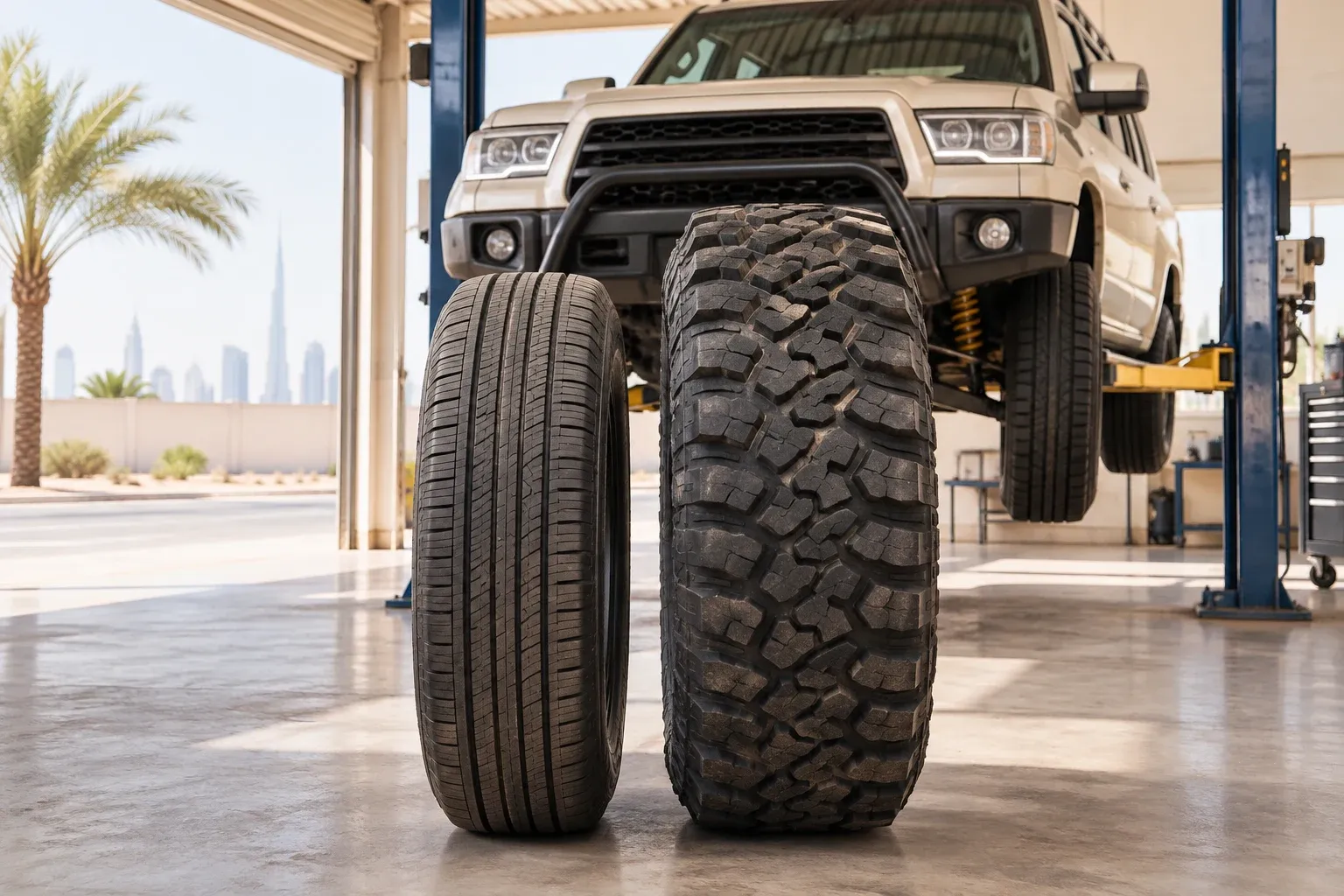
Off-Road Tyre Upgrade
Moving to a larger or more capable tyre set, with size, rim, clearance and speedometer advice for your 4x4.
AED 1,700 to 3,000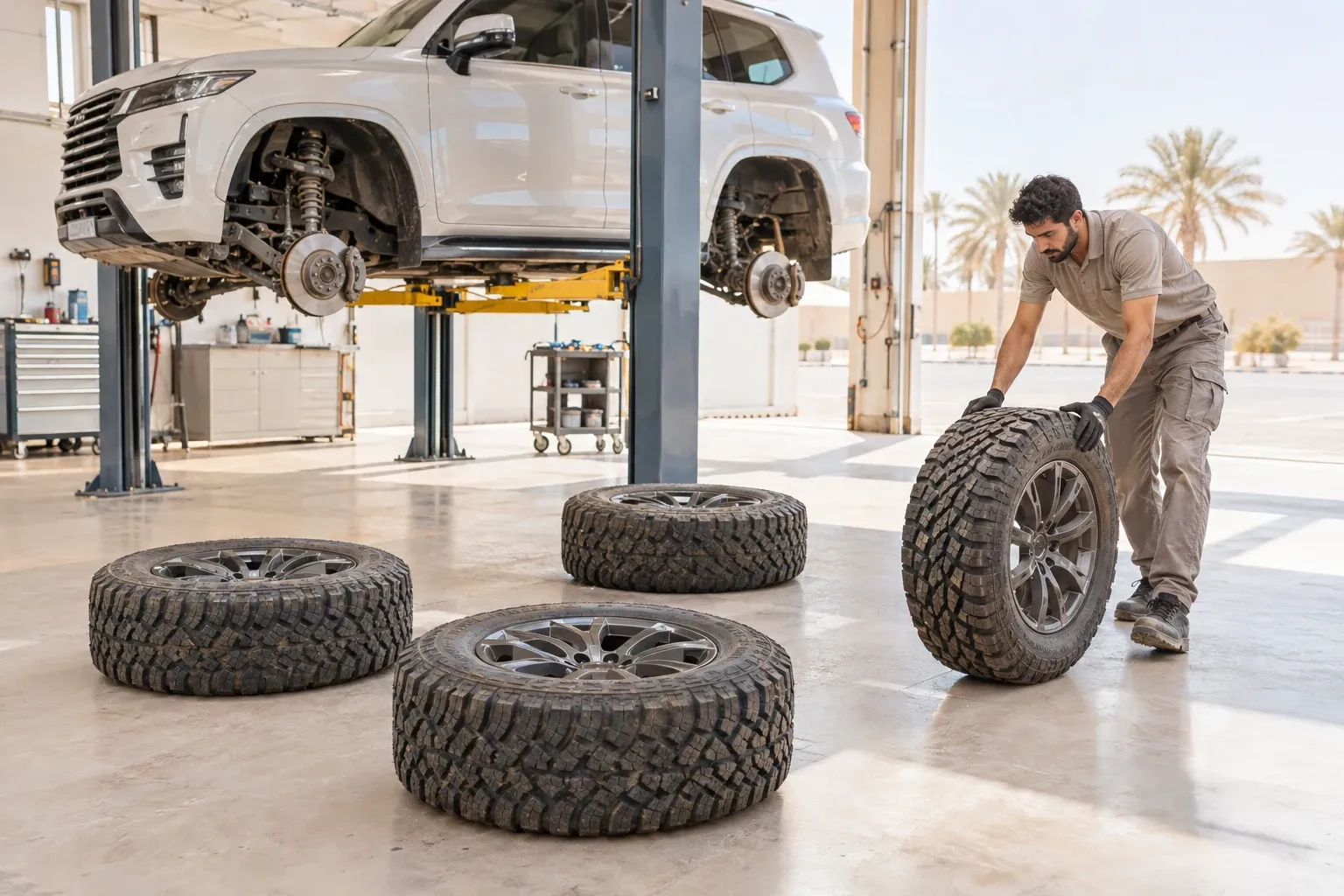
Tyre Rotation
Moving tyres between axles to even out wear, including the spare, with the right pattern for 4WD and directional treads.
AED 100 to 200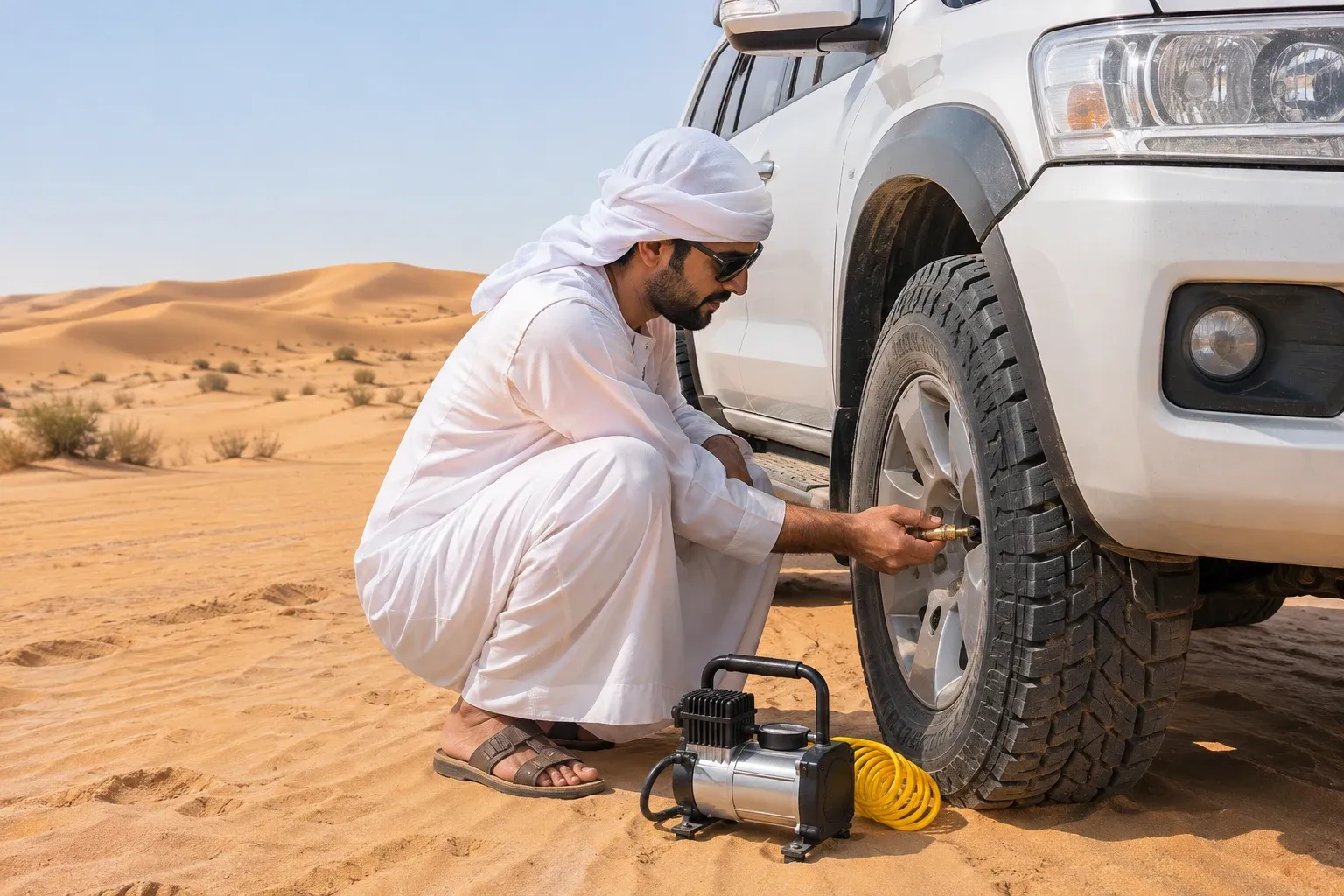
Desert Tyre Prep
A pre-trip check and kit set-up for sand driving: tyres, pressures, deflator, compressor and recovery basics.
AED 50 to 450Frequently asked questions
Are all-terrain tyres good in sand?
Yes, at the right pressure. They float well when lowered carefully, commonly from 15 to 20 psi as a starting point, and must be reinflated before tarmac.
Are all-terrain tyres noisy?
A little more than highway tyres, and the level varies by model. The Yokohama Geolandar G015 is known for a quieter road ride.
How long do all-terrain tyres last in the UAE?
It depends on pressure, driving and heat. Check tread and age regularly, because most makers advise inspection from 5 years and replacement by 10.
Do all-terrain tyres cost more than normal tyres?
Usually yes, because of the larger size and tougher construction. New tyres start from AED 390 per tyre.
Should I choose all-terrain or mud-terrain?
For most UAE drivers, all-terrain. A mud-terrain suits heavy rock and mud use and costs you in noise and wear on the road.
Can I fit all-terrains to an SUV?
Yes, for many SUVs, as long as the size and load rating match. We confirm fitment before ordering.
Send us your tyre size or car model
We reply with options and a starting price. Pay by cash, card, Tabby or Tamara.