Sand Tyres Tyres
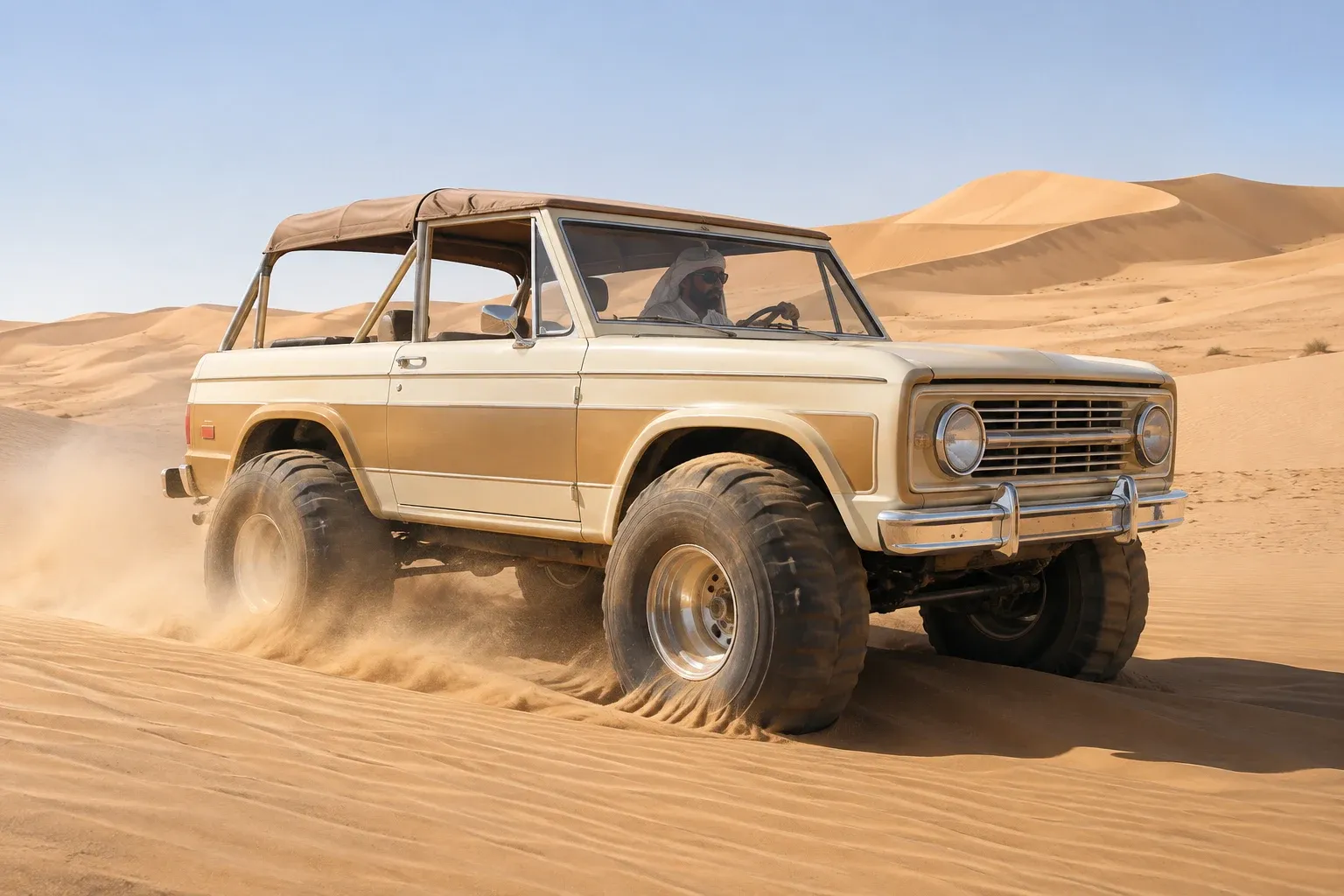
For sand, choose a tall, wide tyre with a moderate tread and flexible sidewall, and run it at lower pressure. Most UAE drivers use all-terrain tyres, which work well. A common starting pressure is 15 to 20 psi, lower only with care and low speed, and always reinflate before returning to tarmac.
Best for
- Weekend dune runs at Lisaili, Fossil Rock, Liwa and Al Qudra
- Drivers who want maximum flotation on soft sand
- Land Cruiser, Patrol and Wrangler owners who lower pressure often
- Recovery and camping trips in the Empty Quarter edge
Avoid if
- You drive on sand rarely and prefer a quiet road tyre
- You plan to use specialist paddle tyres on the road, which is unsafe
- You do not carry a compressor to reinflate afterwards
What works on sand
Sand needs flotation more than bite. The tyre must spread its weight over a larger footprint so it rides on top instead of digging in. That means a taller tyre, a wider section and a sidewall flexible enough to bulge safely at low pressure. Tread matters less than on mud: a moderate pattern with rounded shoulders is best, because deep, sharp lugs dig a trench. Most UAE vehicles use all-terrain tyres for this reason. Dedicated paddle tyres exist for race and dune buggies but are not for road use.
Starting pressures
Pressure is the main tool. A common starting point is 15 to 20 psi, but go lower only with care and at low speed, because very low pressure increases the risk of the tyre coming off the rim. Keep to smooth throttle and avoid sharp turns. Soft sand at Lisaili may need a drop while firmer ground near Al Qudra needs less. The door placard is the authority for road pressure, and sand figures are starting points, not rules. Read our tyre pressure guide and the dune pressure article for more detail.
Reinflate before the road
This is the most important rule. Always reinflate before you return to tarmac, because a tyre at 15 psi on E611 at 100 km/h will overheat and can fail within minutes. Carry a good 12V compressor, a pressure gauge and a deflator. We offer a desert tyre prep visit from AED 150 per vehicle where we check tyres, beads, valves and your kit. If your tyres leak sand into the bead, read sand in the tyre bead.
Choosing tyres for dunes
Sidewall strength and bead fit both matter, because flex without damage is the aim. Light truck all-terrain tyres in load range E are stiffer, so they need slightly different pressures. Wide tyres such as 285/60 R18 or 285/70 R17 give more flotation than narrow ones on a similar rim, though trim varies. Fresh tread is not needed: moderately worn tyres often do fine on sand, but cuts and old rubber do not. Heat in summer makes sand driving harder on tyres, and older rubber cracks sooner.
Recovery kit and safety
Carry tracks or boards, a shovel, a recovery strap, a compressor and a full-size spare. Dune driving with no tyre kit is poor practice, especially in summer. Do not drive alone in remote areas, and tell someone your route. If a tyre loses a bead in soft sand, stop and do not keep driving, because the rim can be damaged. We can repair damaged rims through rim repair, from AED 220 per rim, and our mobile vans help with flat tyre call-outs from AED 120.
Sand Tyres tyre examples
| Tyre | Type | Why it suits |
|---|---|---|
| Maxxis Bighorn MT-764 | Mud-terrain | A long-standing choice for Middle East desert driving, with a tall sidewall. |
| Toyo Open Country A/T III | All-terrain | Commonly used on dunes, with good flotation at lower pressure. |
| BFGoodrich All-Terrain T/A KO3 | All-terrain | Strong sidewall that tolerates lower pressure on firm dunes. |
| Yokohama Geolandar A/T G015 | All-terrain | Smooth running with decent soft-ground traction. |
| Falken Wildpeak A/T3W | All-terrain | Good all-round grip and a durable carcass for mixed desert routes. |
Common vehicles: Toyota Land Cruiser, Nissan Patrol, Jeep Wrangler, Toyota Hilux, Land Rover Defender, Ford Raptor, Toyota FJ Cruiser.
Car brands that often run sand tyres tyres
Frequently asked questions
What pressure should I use on sand?
A common starting point is 15 to 20 psi. Go lower only with care and at low speed, and always reinflate before returning to tarmac.
Do I need special sand tyres?
No. A good all-terrain at the right pressure works for most dune driving. Paddle tyres are for specialist vehicles.
Can I drive on tarmac after sand with low pressure?
No. Reinflate first. Low pressure at speed overheats the tyre.
What happens if my tyre comes off the bead?
Stop, avoid driving on it and reseat the bead with a compressor or call us. Driving on a loose tyre can damage the rim.
Which is better for sand, narrow or wide?
Wide tyres give more flotation, within what your arches and the vehicle allow.
Send us your tyre size or car model
We reply with options and a starting price. Pay by cash, card, Tabby or Tamara.