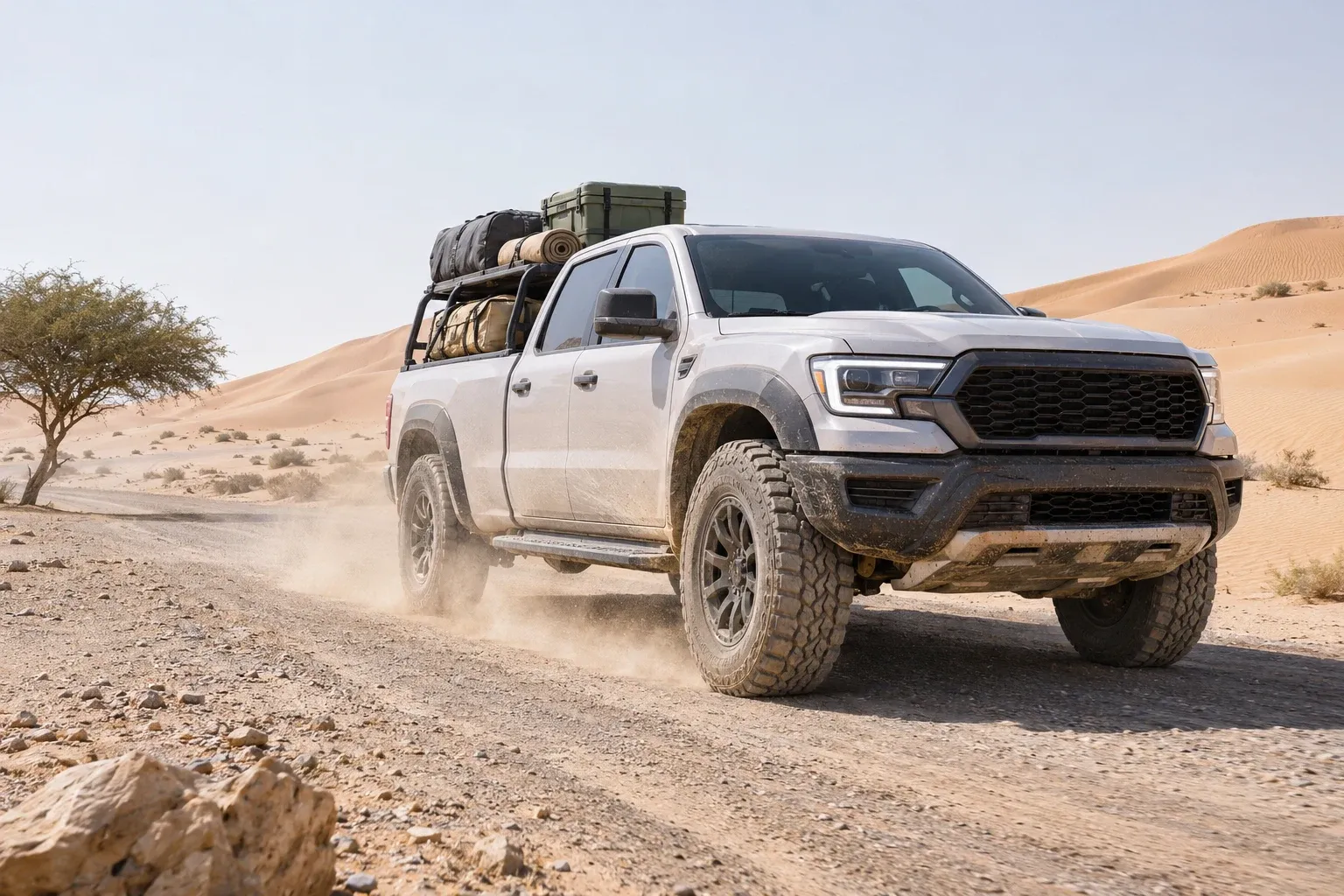
For most UAE drivers, an all-terrain tyre is the better choice. It is quieter, wears more slowly on hot tarmac and copes well with sand, gravel and the odd wadi crossing. A mud-terrain only makes sense if you drive on rock, wet clay or rough mountain tracks often enough to justify the noise and cost.
I fit both every week, and the mistake I see most often is a driver buying a mud-terrain because it looks right, then regretting it by the second month on the E311.
The short version
| Factor | All-terrain | Mud-terrain |
|---|---|---|
| Road noise | Moderate | Loud, a hum at speed |
| Wear on hot tarmac | Slower | Faster |
| Dry sand | Good with correct pressure | Good, no big advantage |
| Rock and gravel | Good | Better grip and cut resistance |
| Wet clay or mud | Fair | Best |
| Fuel use | Slightly lower | Slightly higher |
| Typical price | Mid range | Often higher |
Use that table as a first sort. The rest of this post explains the reasoning, so you can judge your own case.
What the tread is actually doing
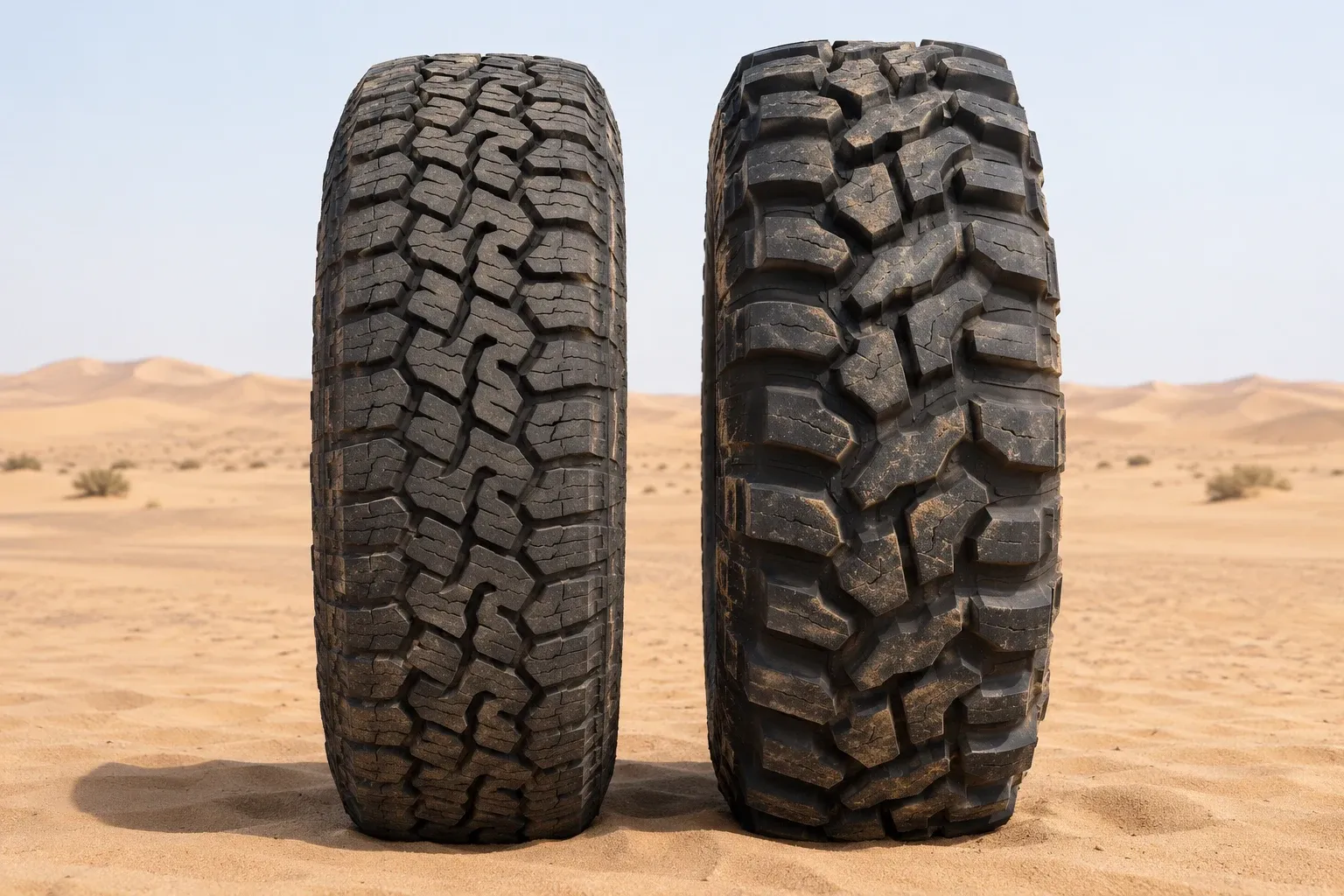
An all-terrain tyre uses a tread pattern with blocks that are closer together. It is built to balance road manners with grip off the tarmac. A mud-terrain tyre has big, widely spaced lugs with deep voids between them. Those voids are designed to throw out mud and bite into soft ground.
On tarmac, the same voids are a problem. Large blocks squirm and heat up, they make noise, and they wear unevenly if you do not rotate often. The soft, grippy compound that helps on rock also wears quickly on a summer road that can be far hotter than the air.
Sand is not mud
This is where UAE drivers get misled. Marketing for mud-terrain tyres shows deep mud, and many buyers assume sand behaves the same way. It does not. Dry sand does not pack into a tread and it does not clog. What decides your result in sand is flotation, which comes from pressure and sidewall strength, not lug depth.
I have seen a well-set all-terrain walk up dunes at Lisaili that a mud-terrain at road pressure would never manage. Pressure is the tool here. Our guide to tyre pressure for dune bashing shows the starting points.
If sand is your main off-road use, you may not need either. A strong all-terrain is usually enough.
Where a mud-terrain earns its place
There are real cases for it.
- Rocky mountain tracks around Hatta and the northern emirates, where sharp stone cuts sidewalls.
- Wet, heavy ground after rain, where clay clings to ordinary tread.
- Recovery and expedition use, where you carry a heavy load far from help.
If that is how you drive, the extra grip and tougher sidewalls pay for themselves. If you go there twice a year, I would hire a different vehicle or accept a slower pace instead of living with a mud-terrain every day.
Living with them every day
Noise and comfort
A mud-terrain hum rises with speed and fills the cabin on the E11. Some drivers do not mind. Others stop enjoying long drives. Test-drive a friend’s vehicle before you commit.
Heat and wear
UAE summer road surfaces get very hot, and aggressive tread blocks flex more and build more heat. In my experience mud-terrains wear faster and can show chipping or uneven edges sooner than an all-terrain on the same vehicle. Rotating them regularly helps, and so does keeping pressure correct. Our post on how long 4x4 tyres last in the UAE goes into the wear picture.
Balance and alignment
Heavy, chunky tyres are harder to balance. You may need more weight on the rim, and a poor balance shows as a steering shake at 110 km/h. A proper wheel balancing and a check of alignment keep things smooth.
The middle option
There is a third tyre worth knowing about. A rugged-terrain tyre sits between the two. It has a more open tread than an all-terrain with better road manners than a mud-terrain. Many owners who thought they wanted a mud-terrain end up happier here.
Choosing by driver
Here is how I would match tyre to person.
- City driver with occasional dune trips. All-terrain. It is the sensible default.
- Weekend desert regular. All-terrain with a stiff sidewall and a correct load rating.
- Mountain and rock tracks every month. Rugged-terrain or mud-terrain, depending on how rough.
- Heavy overland build with a load. Check load rating first, then tread. A mud-terrain can make sense if the sidewall is the priority.
- Mostly motorway. Consider a highway-terrain tyre instead of either.
Price and sizing
Price depends on size, brand, load rating and rim diameter. Our new off-road tyres start from AED 390 per tyre, and larger or heavier-rated sizes cost more. Mud-terrains in common 4x4 sizes such as 285/70 R17 or 275/65 R18 often sit above equivalent all-terrains.
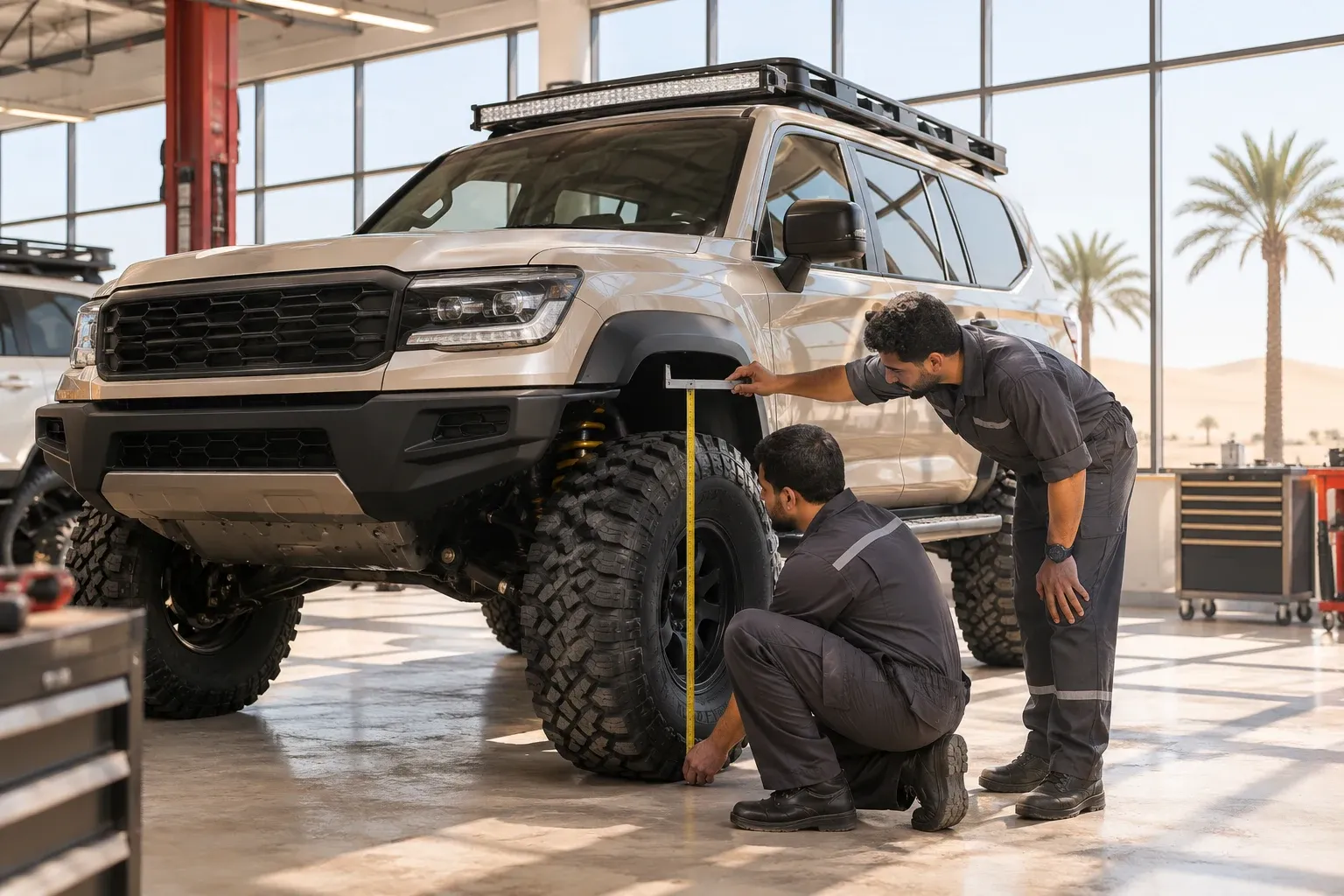
Check your door placard for the factory size before you order, since sizes vary by trim and year. If you want to change size, read first about fitting bigger tyres so you know the limits.
Questions I ask drivers
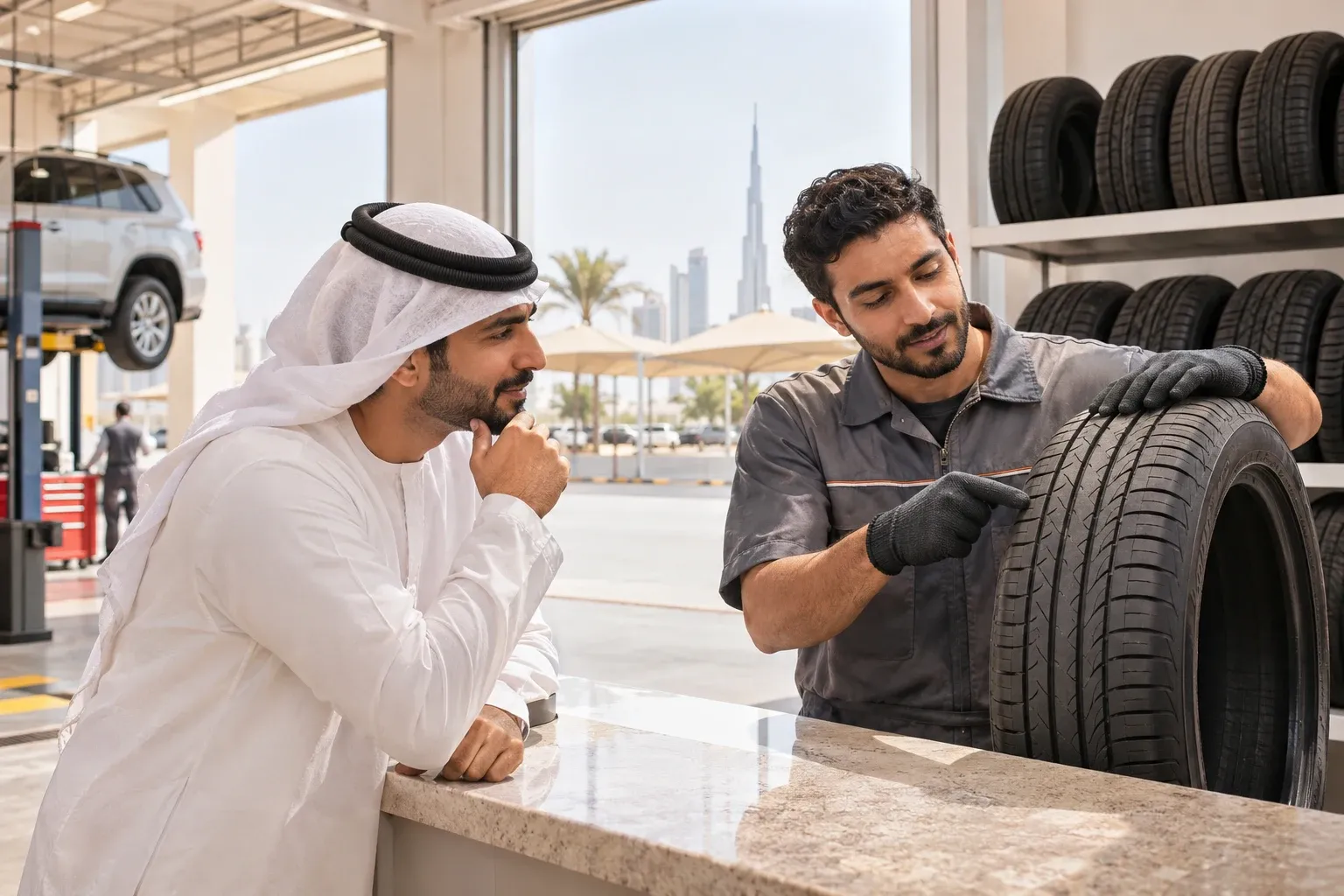
Before I recommend a tyre, I ask three things. How many kilometres a week do you do on tarmac? What is the worst surface you actually drive on? Do you tow or carry weight? The answers usually settle it in a minute. If most of your driving is road and soft sand, the choice is clear.
Real-life examples of how I advise
A driver with a Prado who commutes from Sharjah to Dubai each day and spends a few weekends a year at the dunes comes in asking for mud-terrains because a friend has them. I ask how many kilometres they drive on the road. The answer is nearly all of them. I explain the noise, the faster wear and the extra cost, and most choose an all-terrain.
A different owner, with a modified Hilux used for mountain tracks and recovery work, has a real need. They drive on sharp rock most weeks, and the stronger sidewall and deeper lugs earn their keep. For that person, I fit the mud-terrain and talk about rotation and pressure to manage wear.
A third case is the family with a G-Class who want something that looks tough. Here I stay honest. A tyre should match how the vehicle is used, and looks alone do not justify the trade-offs. We often settle on a quiet all-terrain with a clean pattern that still looks the part.
In all three the tyre follows the use, not the other way round. If you are unsure, bring the vehicle in and talk it through with me, and we can look at your old tyres to see how they wore.
Final advice
An aggressive tyre is the wrong choice when you do not use what it offers. I would never push a mud-terrain on a daily driver that sees dunes four times a year. Pick the tyre for the roads you drive on Monday morning, then set pressure correctly for the weekend. That order saves money and keeps the vehicle pleasant to drive.