For most 4x4s on soft UAE dunes, a starting pressure of 15 to 20 psi gives enough flotation without risking the tyre bead. Go lower only at low speed and with care. Always reinflate to your door placard pressure before you return to tarmac, because sand pressure is not safe at road speed.
I have spent five years fitting and fixing tyres across Dubai, Abu Dhabi and Sharjah, and the question I hear most before a weekend trip is simply “how low should I go?” There is no single number. There is a sensible range, and the right point inside it depends on what you drive and where.
Why lower pressure works on sand
A tyre on soft sand needs a longer, wider contact patch so it floats on top instead of digging in. Letting air out makes the tyre bulge at the bottom and flatten out. The footprint gets longer, the load spreads over more sand, and the vehicle stops sinking.
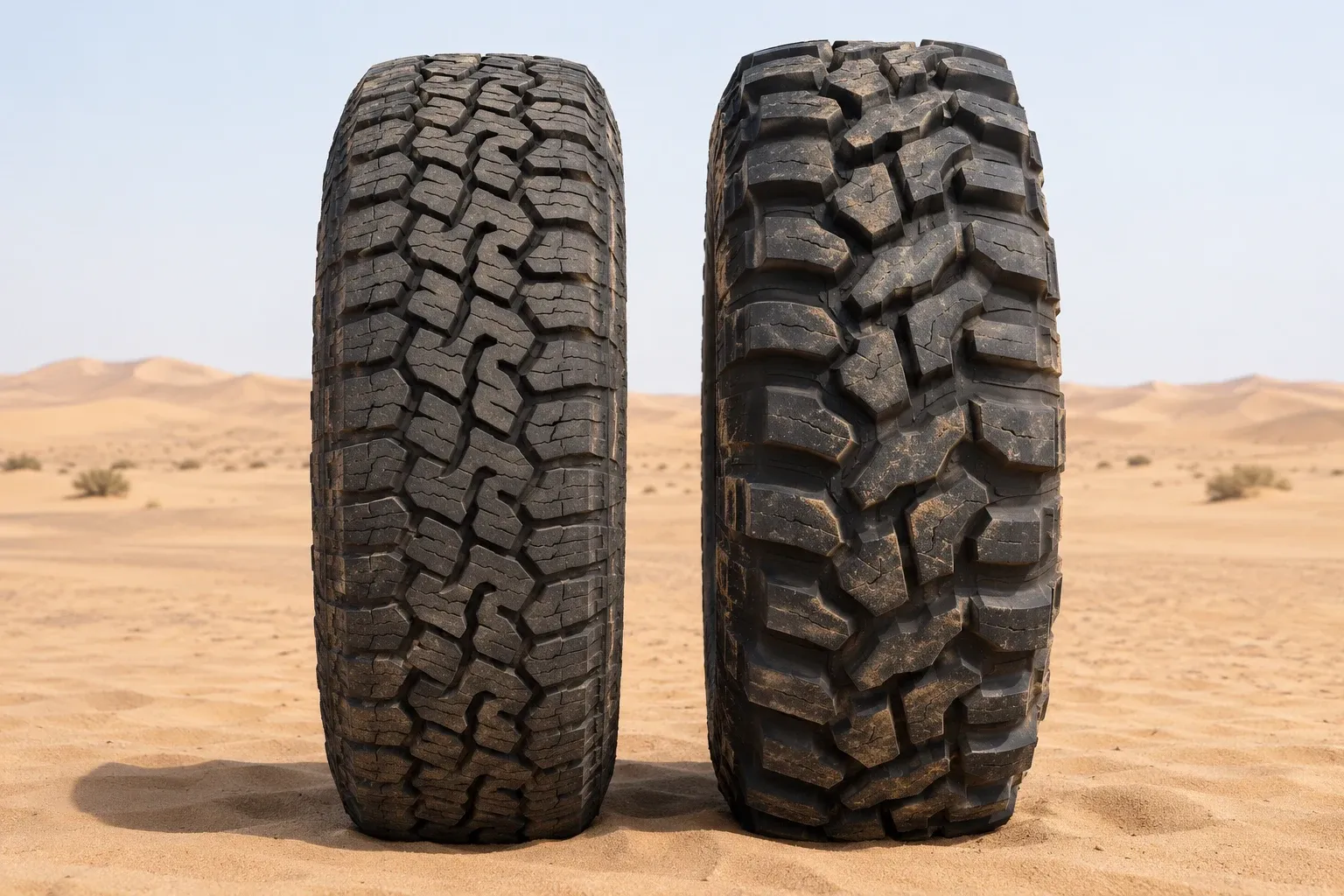
The trade is that the sidewall now carries more of the work. A tyre with a stiff, heavy sidewall copes with this better than a soft, tall-profile tyre. That is one reason an all-terrain tyre with a decent load rating tends to survive desert driving better than a cheap highway tyre.
Starting pressures by situation
These are the figures I give drivers who ask. They are starting points, not rules, and none replace your own judgement on the day.
| Situation | Starting pressure | Notes |
|---|---|---|
| Hard-packed gravel track to the dunes | Road pressure, or 5 psi below | Low pressure here only wears the tyre |
| Firm sand, Al Qudra style flats | 20 to 24 psi | Often enough for light, easy tracks |
| Soft dunes, Lisaili or Fossil Rock | 15 to 20 psi | The common working range |
| Deep, steep dunes in Liwa | 12 to 15 psi | Low speed, careful steering |
| Stuck and digging out | Lower as a last step | Reinflate as soon as you are free |
Heavier vehicles such as a loaded Land Cruiser 200 or Patrol Y62 usually need to sit toward the lower end of each range, because they sink further. A light Wrangler or a Jetour may float on a little more pressure.
How to drop pressure properly
Letting air out by feel is how people end up with four different pressures. Here is the order I would follow.
- Park on firm ground before the dunes begin, not on the first soft patch.
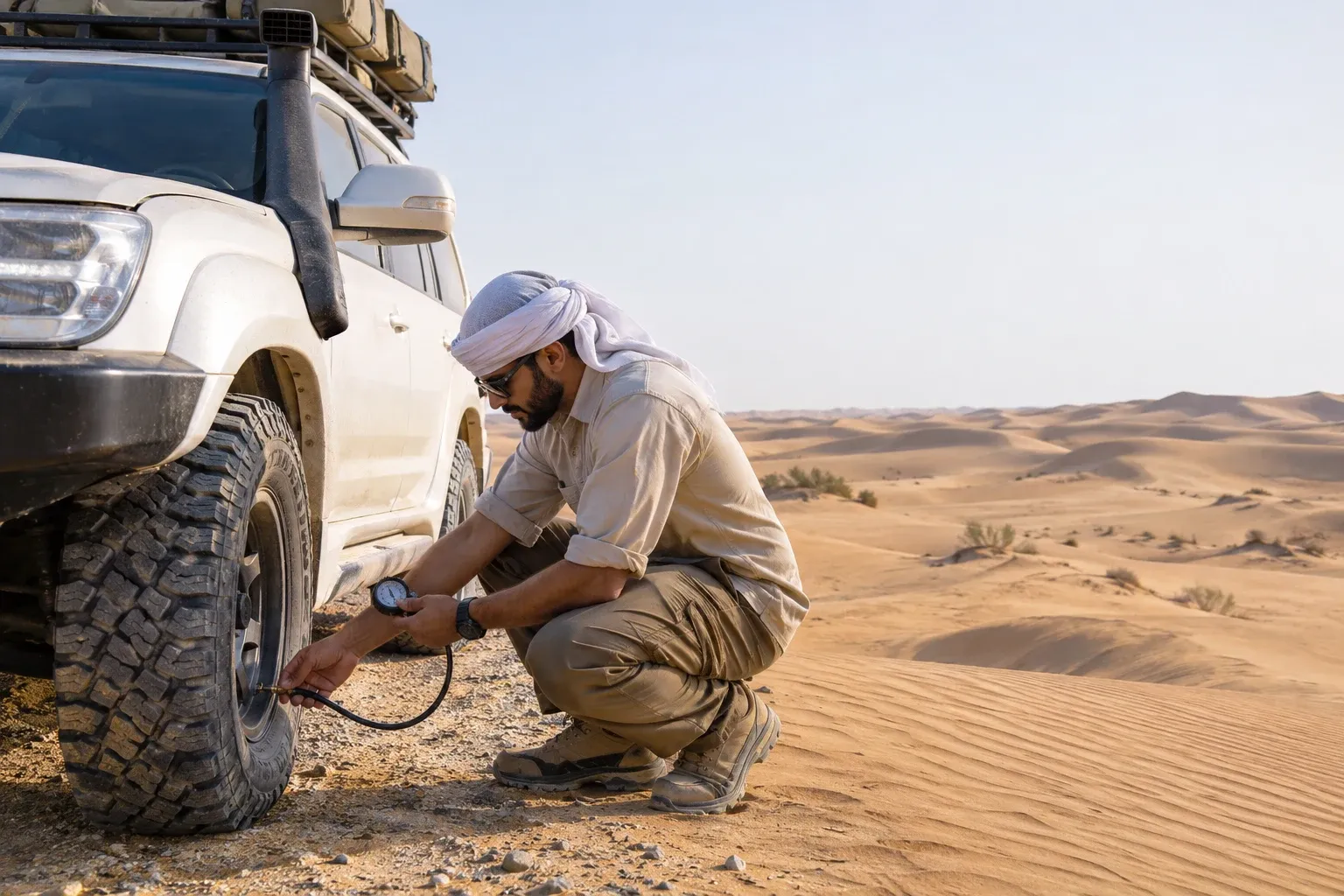
- Check each tyre with a decent gauge. Do not trust the dash reading alone.
- Release air in short bursts and recheck. A deflator tool makes this quick and even.
- Match all four tyres, front and rear, unless you have a reason to run the rear a touch lower.
- Note your starting road pressure so you know what to return to.
I do not recommend pulling the valve core for speed and then trying to guess the result. You will overshoot, and an uneven set makes the vehicle pull in sand.
Speed matters as much as psi
Low pressure is only safe at low speed. A tyre at 15 psi flexes heavily, builds heat quickly and can roll off the rim in a hard turn. On a firm stretch, I would keep it gentle and steady. Save the sharp, fast steering for tarmac at full road pressure.
Side slopes are the other danger. Turning across a dune face at low pressure loads the sidewall sideways, and that is exactly when a bead lets go. If you feel the vehicle wallow, ease off rather than push through.
Reinflate before you drive home
This is the step people skip. They leave the dunes at 16 psi, join the E611 or Al Ain Road, and drive an hour home. A tyre run that soft on tarmac overheats, wears the shoulders, and can fail without much warning.
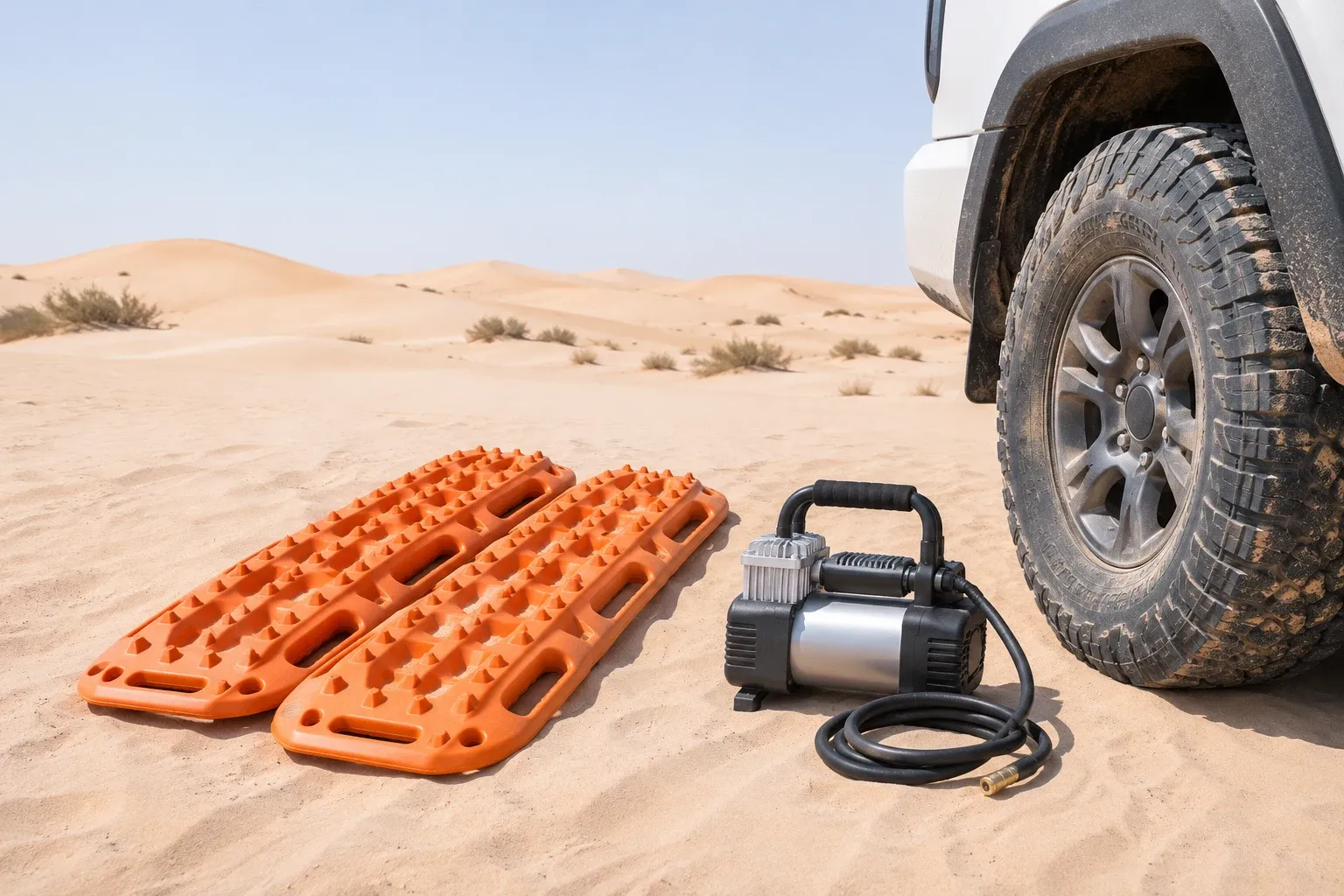
Carry a compressor and use it at the edge of the sand. Bring each tyre back up to the pressure on your door placard, which is the authority for road pressure. If your compressor is slow, start the refill while you pack up and finish it before you move off.
If you do not own a compressor, I would put one on your list. Our desert recovery kit checklist covers what else belongs in the boot.
Mistakes I see in the workshop
Most pressure-related damage comes in through a short list of habits.
Driving to the dunes already deflated
Some drivers drop pressure at the car park and drive the last 40 minutes on a tarmac approach road. The tyre heats up and the shoulder wears. Drop pressure at the sand edge, not before.
Running mismatched tyres
An old tyre with a weak sidewall next to a new one behaves differently under low pressure. If one tyre is cracked or aged, sand pressure will find it. Check the date code first. Our guide to reading the tyre date code shows how.
Forgetting about the spare
A flat in the desert with a spare at the wrong pressure is a long afternoon. I would check the spare against road pressure before every trip.
Ignoring sealed-bead tyres on tired rims
A bent or corroded rim will not hold a bead at low pressure. If you have had impact damage, look at the rim before you go. Bent rims are a repair question of their own.
What I would do before a trip
A quick visit before the weekend saves trouble. Our Desert Tyre Prep service starts from AED 150 per vehicle, and a Tyre Pressure Check starts from AED 30. The price moves with vehicle size and where we meet you. I look at sidewalls, beads, valve stems and the spare, because those are what fail in sand.
A note on tyre choice
Pressure helps, but it cannot rescue the wrong tyre. A tall, soft-sidewall road tyre will struggle at any pressure. A tyre with a stiffer carcass and a decent load rating gives you more room to work with. If you are unsure what suits your vehicle and how you drive, I would rather talk it through than sell you something you do not need.
Vehicle weight and tyre size
Two vehicles on the same dune can need different pressures. A loaded Land Cruiser carrying fuel, water and four passengers presses harder on the sand than a light Wrangler with a driver. The heavier vehicle sinks sooner, so it tends to need lower pressure to float. But it also puts more strain on the sidewall, which is why I push heavier owners to check the load rating before they chase a low number.
Tyre size plays a part too. A wide tyre such as 285/70 R17 already spreads its load across a bigger footprint, so it can float on a little more air than a narrow 235/85 R16. A tall sidewall flexes further and gives a longer contact patch, while a low-profile tyre on a big alloy rim has little sidewall to give. If you drive a luxury SUV with 20-inch wheels, dune driving is hard on rims and tyres, and I would keep sand trips gentle and slow.
Finally, think about the surface on the day. Sand that is cool and damp first thing in the morning is firmer than the same sand in the afternoon heat. You may need less deflation at dawn than at midday. Start at the higher end of the range and drop further only if the vehicle struggles.
Summary of what to do
Start at 15 to 20 psi on soft dunes, drop air in steps, keep your speed down, and reinflate to the door placard figure before you touch tarmac. If something feels wrong, stop and recheck the pressure before you carry on. That habit has kept more tyres on rims than any piece of equipment I know.