Tyre Size Guide
A tyre size such as 285/60 R18 116H gives the width in millimetres, the sidewall height as a percentage of width, the rim diameter in inches, the load index and the speed rating. Your door placard shows the size the maker approved, and it is the safest starting point when you replace tyres.
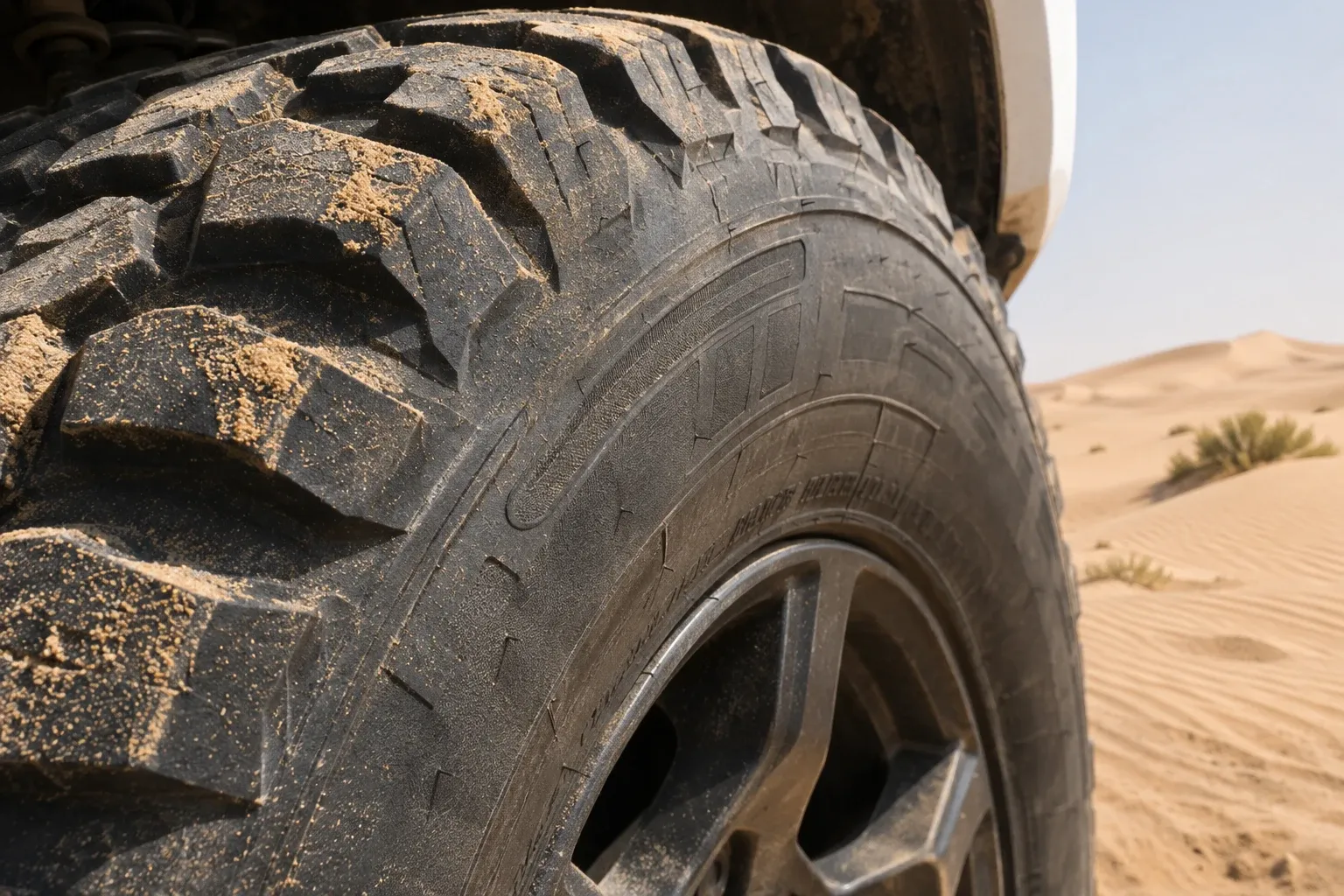
How to read a tyre size
The size on the sidewall is a code. In 285/60 R18 116H, 285 is the width of the tread in millimetres, 60 is the sidewall height as a percentage of that width, R means radial construction, 18 is the rim diameter in inches, 116 is the load index and H is the speed rating. A taller number after the slash means a taller sidewall, which gives more cushion on rough ground and more protection for the rim. A lower number gives sharper steering but is easier to damage on kerbs and speed humps. A common mistake is to read only the first three numbers and ignore the rest. Two tyres with the same width and rim size can have different load indexes, and on a heavy 4x4 that difference decides whether the tyre is safe. Ask for the full size, including load index and speed rating, whenever you compare quotes. If one price looks far lower than the rest, check that the tyre carries the same load index as your original.
- 285 is the section width in millimetres
- 60 is the aspect ratio, so the sidewall is 60 per cent of 285 mm
- R means radial, and 18 is the rim diameter in inches
- 116H is the load index and speed rating, covered below
Where to find your size
The original size is on the door placard, usually on the driver door pillar, and in the owner manual. The tyre itself shows the fitted size on the sidewall. These can differ if the previous owner changed tyres, so treat the placard as the authority for the size the maker approved. Fitments vary by trim and year. For example, a Land Cruiser Prado commonly runs 265/65 R17 or 265/60 R18, a Patrol Y62 commonly runs 265/70 R17 or 275/60 R20, and many Land Cruiser 200 models use 285/60 R18. Always check your own vehicle rather than assuming. If your tyres were replaced by a previous owner, compare the size on the sidewall with the placard before you buy again. Some owners have fitted taller or wider tyres without noticing the speedometer error. A quick way to check is to compare your speedometer with a GPS reading on a flat stretch of E311. A reading that is several km/h higher than the GPS at 100 km/h is normal, but a large gap suggests the fitted size differs from the original.
Load index and speed rating
The load index is a code for the weight one tyre can carry. A load index of 116 means 1,250 kg per tyre, 112 means 1,120 kg and 120 means 1,400 kg. Never fit a tyre with a lower load index than the original, and be careful with heavy vehicles that tow. The speed letter shows the top speed the tyre is rated for at full load: S is 180 km/h, T is 190 km/h, H is 210 km/h and V is 240 km/h. Most 4x4 tyres are T or H. UAE roads allow high speeds, and heat reduces the margin, so match the original rating or higher. Remember that load index applies per tyre, and the rating assumes the tyre is at the correct pressure. A tyre at 20 per cent under pressure carries less than its rating and heats up faster. Towing a trailer adds weight to the rear axle, so the rear tyres need particular care. If you are close to the limit of your vehicle payload, ask us about a higher load index or an LT tyre rather than relying on the standard fitment.
LT, XL and flotation sizes
Pickups and heavy 4x4s often use LT sizes written as LT265/70 R17 with a load range such as E. LT means light truck, and these tyres have stronger carcasses and higher pressures than passenger tyres. XL, or reinforced, sits between standard and LT. Off-road and mud-terrain tyres are often sold in flotation sizes such as 35x12.50 R17, where the first number is the overall diameter in inches and the second is the width in inches. These are not direct equivalents of metric sizes, so we check fitment before ordering. See light truck tyres for load detail. Be aware that flotation sizes can be misleading. A 35x12.50 R17 tyre is close to 889 mm tall, which is much taller than the 799 mm of a 285/60 R18. That extra height changes gearing and clearance, and on many vehicles it needs a lift or trimmed arch liners. Mud-terrain and rugged-terrain tyres also tend to run wider than their stated size, so measure the actual clearance rather than trusting the label.
Changing size safely
You can change size, but it should be a planned decision. Keep the overall diameter within about 3 per cent of the original so the speedometer, ABS and traction control stay accurate. For example, 285/60 R18 has an overall diameter of about 799 mm, and 265/65 R17 about 776 mm. A taller tyre may rub on full lock or at full suspension travel, and a wider one may touch the arch liner. Changing wheels also affects load, so check the wheel rating. Read the blog on fitting bigger tyres before you decide. Wheel offset and width matter as well. A wider rim pushes the tyre closer to the arch or suspension, and a different offset changes steering feel and wheel bearing load. Fitment checks should include the brake calipers, the inner suspension arms and the spare wheel carrier. If you plan to tow, remember that taller tyres reduce the effective gearing and raise the load on the engine and transmission.
Plus-sizing and rim damage
Larger rims with lower-profile tyres look sharp but offer less cushion. In the UAE, where potholes at construction sites and kerbs in parking structures are common, they bend rims more easily. A bent rim can leak air or cause vibration. Our rim repair service starts from AED 220 per rim. If you want an off-road setup, go the other way, with a smaller rim and taller sidewall, because the extra rubber helps at low pressure on sand. Make sure the brakes still clear the smaller wheel. Low-profile tyres also run hotter in the UAE, because the short sidewall has less air volume to absorb heat. They are less forgiving if pressure drops, and a small loss that a tall sidewall tolerates can destroy a low-profile tyre. If you keep the original large wheel, check pressure more often and avoid sharp-edged kerbs and expansion joints in car parks and on bridges along E11.
Reading the date code
A four-digit code after the letters DOT shows when the tyre was made. The digits are the week and year, so 2323 means the 23rd week of 2023. Age matters as much as size. Most makers advise inspection from 5 years and replacement by 10, and UAE heat often shortens this. Do not buy tyres with an old date code from a discount seller without checking, and check the spare as well. We explain it in more detail in our blog on how to read a tyre date code. The date code sits on the sidewall inside a small oval or rectangular box on one side only. Check both sides before you assume the tyre has none. Tyres sold as new may already be a few years old, so ask for the build week when you buy. Spares often outlive their safe life, because nobody looks at them, and a spare older than 10 years should be replaced even if the tread looks new.
Getting the right size from us
Send us your vehicle model, year, the size on your sidewall and a photo of your door placard, and we will confirm options and a price. New off-road tyres start from AED 390 per tyre, and the price depends on size, brand, load rating and rim diameter. Fitted tyre replacement starts from AED 390 per tyre. We can fit at the Al Quoz workshop or by mobile van across Dubai, Abu Dhabi and Sharjah. For recommendations by vehicle, see tyres by vehicle. If you want to change from the original size, tell us your reason, whether that is clearance, looks, load or sand flotation, and we will say plainly whether the change helps. Sometimes the best answer is to stay with the original size and change the tyre type instead. We would rather fit the right tyre once than see you return after a rubbing problem or a speedometer error.
Related guides
Frequently asked questions
What do the numbers on a tyre mean?
They give the width in millimetres, the sidewall height as a percentage of the width, the rim diameter in inches, the load index and the speed rating.
Where do I find my correct tyre size?
On the door placard, in the owner manual and on the sidewall of your current tyres. The placard is the authority for the approved size.
Can I fit a different size to my 4x4?
Often, within limits. Keep the overall diameter close to the original, check clearance and wheel rating, and ask us before ordering.
What does LT mean on a tyre?
Light truck. These tyres have stronger construction and higher load ratings than passenger tyres, and they run higher pressures.
What does a load index of 116 mean?
It means each tyre can carry up to 1,250 kg at its rated pressure.
Does tyre age matter more than size?
Both matter. Makers advise inspection from 5 years and replacement by 10, and heat can shorten that.
Are bigger tyres better for the desert?
Taller and wider tyres give more flotation, but they must fit your arches, brakes and drivetrain. We check fitment before fitting.
Send us your tyre size or car model
We reply with options and a starting price. Pay by cash, card, Tabby or Tamara.